
The 5 Things I Wish Someone Had Told Me Before I Started My Architecture Firm
By Ryan Nestor
When I started my architecture firm nearly three decades ago, I thought success was simple: get great clients, design great restaurants, and everything else would take care of itself.
It doesn’t.
Recently, I heard an architect recount advice she received from a sociologist who exclusively studied why some architecture firms succeed and others don’t. His conclusion was as follows:
To run a successful architecture firm, you need three things:
You must be able to get the work,
You must be able to do the work,
And you must be able to run the business.
No single person, he said, excels at all three.
I haven’t stopped thinking about that since I heard it. Because for most of my career, I focused almost entirely on the first two. I didn’t realize what I was missing. Looking back over 28 years, here are five things I wish someone had told me before I started my firm.
1. Business is a Verb, Not a Noun
Early on, I understood how to win projects and how to complete them. I came from a family of small business owners. “Business” felt intuitive, it was simply the result of the process. It’s just what you do.
In my firm’s early years we operated lean. With six or seven people, formal systems didn’t feel necessary. Timesheets lived in Excel. Metrics were instinctual. It wasn’t rocket science. But as we grew, I realized something uncomfortable: we had outgrown our infrastructure long before we admitted it.
Had I understood earlier that running the business is a separate discipline, not a byproduct of good design, I would have structured the firm differently from the start. With more investment in our “back of house” processes, we are now able to support a larger staff, larger projects, and greater insight into what the future may bring.
2. Find Partners Who Amplify, and Partners Who Complete
Many of the most successful firms historically aren’t built by lone geniuses. They were built by complementary partners.
One person sold.
One person executed.
One person ran the business.
The reason well-known architectural firm names like Skidmore, Owings & Merrill (SOM) exist is because the founders offset one another’s skillsets.
For years, I didn’t fully recognize what I lacked — or that I needed to intentionally replace that functionality. I had strong design partnerships that amplified creativity and helped us win bigger, more exciting projects. But those partnerships strengthened what I already loved doing: selling and designing!
If I could go back, I would tell my younger self: Don’t just double down on your strengths. Identify your blind spots — and build around them.
3. Good Design Isn’t Always Big and Loud
There was a time when I believed architects had a moral obligation to make everything “better,” whether the client asked for it or not. There was a moment during a large-scale food hall project where I realized the feasibility of a design is as important as the final result. By balancing those two aspects of a job a more appropriate and responsible outcome is reached.
Earlier in my career, I often over-delivered design complexity. Intricate detailing. Precision-heavy elements. Ambitious gestures. Sometimes the client appreciated it. Sometimes they didn’t even notice. But we felt the pain — in hours, in profitability, in execution stress.
Now I ask a different question: Does this design align with our team’s capacity, our business model, and the client’s actual needs? That restraint isn’t creative compromise. It’s maturity.
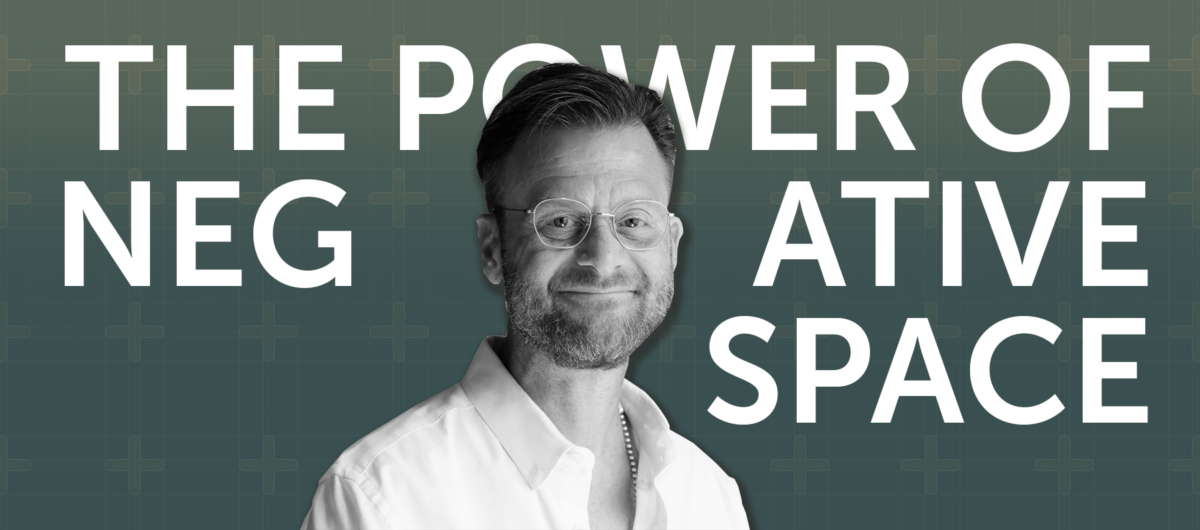
4. The Power of Negative Space
Myself and my design partner amplify each other, we are additive. We want to layer, refine, elevate, improve.
But the longer I practice, the more I appreciate restraint. In fine art, negative space isn’t emptiness — it’s composition. It gives meaning to what’s there. The same applies to architecture. Sometimes the strongest move is a single clear gesture executed flawlessly. Not five clever ideas fighting for attention. Not complexity for the sake of ego. Just clarity.
Designing “less” can actually require more discipline. It forces you to choose what matters most — and let go of the rest. That shift has been one of the most important evolutions in my career.
5. Always See the Forest and the Trees
Early in my career, I focused intensely on the immediate design problem in front of me. Now, I design, and do business, in context.
Not just the physical context of a space but the client’s world, their operational reality, their budget, our team’s capabilities, and the long-term health of the firm. Every project now runs through three lenses:
- Does it work creatively?
- Does it work for the client?
- Does it work for our business?
If the answer isn’t yes across all three, we reconsider. That broader perspective has changed how I think about every commission. It has made me a more responsible designer and a more pragmatic leader.